
There are no comments for this product
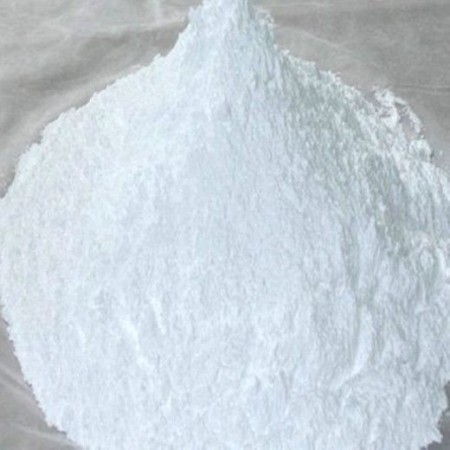


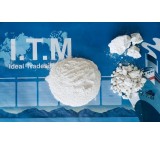
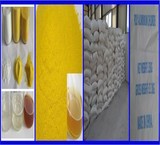
Lime, or calcium oxide with the chemical formula CaO, is a chemical compound with PubChem ID 14778; its molar mass is 56.077 g/mol.[1] It is a colorless, white or off-white solid that is odorless and causes severe skin and eye irritation. It is among the materials whose utility has been recognized by humans since ancient times and has been used in the construction of buildings and for stronger bonding of stone or wood components.
Iranians have long been familiar with lime mortar (a slurry of lime and soil), sarooj (a mortar of lime slurry and ash), and hydraulic lime mortar, using these materials in construction. After World War II, in industrial countries, lime mortar has also been used for soil stabilization, especially in road foundations and to prevent plant growth and water seepage under the surface, as well as on embankments, runways, and aircraft station areas. Lime mortar is used for foundation and waterproofing.[2] It can be extracted from underneath a kettle.
Composition of Lime The market lime (quicklime) composition depends on foreign materials present. If limestone contains more than 90% calcium carbonate by weight, the lime produced is considered rich lime; if calcium carbonate is less than 75% by weight, the produced lime is considered poor lime.[2]
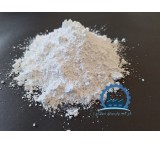
Dead Lime and Lime Water When water is added to calcium oxide (quicklime), a reaction occurs releasing heat that evaporates some water. In this process, lime swells by absorbing water and turns into a white powdery substance known as slaked lime (because it no longer reacts with water). This process is also called lime slaking.
If more water is added to slaked lime, it becomes lime milk, which when filtered yields a clear solution of saturated calcium hydroxide in water, called lime water. Lime water has many applications in the chemical industry, such as in the production of sodium hydroxide, ammonia, metal hydroxides, bleaching powder, and especially in magnesium extraction from seawater.[2]
Characteristics of Lime Lime is white, obtained by calcining limestone. Its specific gravity ranges from 3.08 to 3.30 g/cm³ depending on the calcination temperature, with higher temperatures resulting in lime that reacts more slowly with water. Above 1000°C, lime slightly shrinks and its surface decreases, releasing heat more slowly when hydrated. Lime transitions to liquid phase at 2580 to 2750 degrees Celsius under atmospheric pressure.
Crystalline lime appears as colorless cubes with a yellowish tint. Its hardness ranges from 3 to 4. Water slowly permeates crystalline lime surfaces. When lime powder is added to water, it reacts explosively after several minutes. At temperatures between 1400 to 1500°C, lime grains fuse and crystallize, gradually enlarging.[2] Lime also serves as a pH regulator and disinfectant in livestock and poultry farming.
Uses Heat: Adding water to quicklime releases heat during hydration. Light: When heated to around 2400°C, lime emits light known as "lime light," historically used before electricity. Cement: Calcium oxide is a key component in cement production. Bio-diesel: Acts as an alkaline agent in biofuel production. Petrochemical Industry: A mixture of lime and phenolphthalein is used in petrochemical water tanks to identify pH. Paper Industry: Calcium oxide is used to recover sodium hydroxide from sodium carbonate. Plaster: Prehistoric people used lime-based plaster for shelters, some structures of which stand after 19 centuries. Chemical Industry: Used to remove sulfur dioxide from exhaust gases in a process known as "flue gas desulfurization."
In Ancient Iran The knowledge and use of lime in Iran date back over three thousand years. The squat graves in the Hasanlu region, dating from the 7th and 8th centuries BCE, are filled with lime mortar three meters deep. Floors of Persepolis palaces were coated with red mortar containing lime.[2]
Lime Kilns Historically, lime was calcined in stone-arched kilns with a space underneath for fire. Limestone was loaded and fired for four consecutive days to produce quicklime. Chemically, calcium carbonate in limestone decomposes to calcium oxide upon heating.
Lime mortar use in stone and brick buildings as mortar and wall coating was common from the Parthian era and continued through the Sassanid period.
Ancient people were aware of the chemical and mechanical properties of lime and its mixtures with other materials. They knew how to combine clay with lime and other materials to produce durable, waterproof mortars. Limestone is calcined in the following kiln types:
Tannur kiln: The oldest type in Iran, fire and stones are fixed, temperature distribution is uneven, and lime quality is inconsistent. Heat loss occurs as lime cools, thus rarely used today. Ring kiln: Common for lime production; limestone chunks are stacked with 30% voids to ensure fire reaches all stones. Vertical kiln: Cylinder-shaped, loaded from the top, fired from the bottom, often used in factories like sugar plants. Daily capacity up to 150 tons. Coal, coke, liquid or gas fuel are used. Rotary kiln: Similar to cement kilns but with milder heat. Lump limestone is fed, producing lump quicklime; powdered limestone yields powdered quicklime.[2]
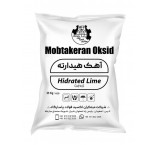
Slaked Lime Quicklime or unslaked lime reacts rapidly with water, becoming slaked lime or hydrated lime. Slaked lime loses chemical water at 400°C and becomes quicklime and water again. Wet, dry, or steam methods are used for slaking quicklime.[2]
Magnesium Lime Contains more than 5% magnesium oxide or 5%-35% magnesium carbonate. Dolomitic lime is a type of magnesium lime with 35%-46% magnesium content. Type S lime, used with Portland cement in construction, is typically magnesium lime produced under heat and pressure and used in cement-lime-gypsum mortars.
Lime Use in Asphalt Injection of slaked lime slurry is used to repair highways and roads where clay soils under asphalt might leak or shift, converting clay into lime mortar. Methods include drilling holes in asphalt surfaces and injecting lime water beneath layers under pressure, or creating 15-22 cm diameter holes, 50-70 cm deep, into damaged road areas.
Slaked lime powder is poured into holes, mixed with water to form slurry, excavated soil is returned, and the surface is covered with a layer of bitumen.
There are no comments for this product

| Company | شرکت شیمی طیف تبریز |
|---|---|
| Tel | +98 -9×××977597, +98 41-3×××9724 |
| Mobile | +98 936×××7597 |
| Whatsapp link | |
| Country | Iran |
| Province | East Azarbaijan |
| Address | جاده آذرشهر شهرک صنعتی سلیمی |




Jooyeshgar AI Assistant




![Calcium nitrate, Ca(NO3)2 or CaN2O6 [1, 2]](https://www.jooyeshgar.com/userfiles/product/t1723364600-66b874f88a7ed.jpg)